Istanbul lies in an active earthquake region. Therefore, checking building safety in Istanbul is one of the most important steps when you buy property in Turkey. You do not need to be an engineer to ask the right questions. This guide explains what to check, who can help and which documents to request.
Start with the construction year
Turkey tightened its building rules after the 1999 Marmara earthquake. In addition, the current Turkish Building Earthquake Code has applied since 2019. As a general rule, newer buildings were designed to stricter standards. Nevertheless, age alone does not prove a building is safe, so keep checking.
Ask for the occupancy permit
An occupancy permit, often called iskan, confirms that the building matches its approved plans and is ready for use. The municipality issues it after a final inspection. Without it, owners can face problems with utilities, insurance, mortgages and resale. Our guide to documents to check before buying property in Turkey covers it in more detail.
Look closely during the viewing
- Cracks in load-bearing walls, columns or beams.
- Signs of damp or water damage in the basement.
- Columns removed or altered in ground-floor shops.
- Extra floors that look newer than the rest of the building.
Our apartment viewing checklist includes more points to note.
Get an expert opinion
Engineering assessment
For older buildings in particular, a licensed civil engineer can assess the structure. This is a small cost compared with the price of a home.
Ground conditions
Soil quality affects how a building behaves in an earthquake. A local engineer or the municipality can tell you more about the area.
Check the insurance
Residential property must carry DASK, Turkey’s compulsory earthquake insurance. From September 2026 the seller’s policy lapses at the title deed transfer, so you take out a new policy of your own at the purchase.
Building safety in Istanbul: questions to ask the seller
Ask the seller or developer a few direct questions about building safety in Istanbul. First, when was the building designed and approved? Next, has it had any structural assessment or strengthening work? In addition, have any columns or walls been altered, for example in ground-floor shops? Finally, is the building part of an urban transformation plan? Honest sellers answer clearly. Even so, an independent engineer’s view remains the most reliable check.
Compulsory earthquake insurance is issued through DASK, and the title deed cannot be transferred without a valid policy.
Building safety in Istanbul in 2026: codes, risk reports and the renewal subsidy in numbers
Three dates divide Istanbul’s housing stock. Building inspection by licensed private firms became compulsory in the city under Law 4708 in 2001; the earthquake code was rewritten in 2007 and again as the Turkish Building Earthquake Code (TBDY) that took effect on 1 January 2019. A flat’s construction year therefore tells you which rules the structure had to meet and who was checking. The scale of the problem is official: the Environment, Urbanisation and Climate Change Ministry has put the number of homes in Istanbul needing urgent renewal at about 1.5 million (2024 estimate), and by autumn 2026 some 1,298,000 independent units had entered urban-renewal processes in the city since 2012, roughly 1,007,000 of them completed (Dünya, citing ministry figures, 2026).
| Built | Rules in force | What it means for a buyer in 2026 |
|---|---|---|
| Before 1999 | 1975 code, no independent inspection | Highest risk class; ask for a risk assessment under Law 6306 before any offer and price in renewal |
| 1999–2007 | 1998 code, inspection from 2001 (Law 4708) | Better detailing, but concrete quality varies; an engineer’s core test is worth the fee |
| 2008–2018 | 2007 code, full inspection | Generally sound; check for later illegal changes (removed walls, added floors) against the permit |
| 2019 onwards | TBDY 2018, performance-based design, soil-specific spectra | Current standard; most new-build listings on this site fall here |
For an older building the decisive document is the risk report (riskli yapı tespit raporu) issued by a ministry-licensed firm under Law 6306. If the building is declared risky, owners have 15 days to object and the municipality can order evacuation and demolition; the flip side is money. The “Yarısı Bizden” scheme, extended to units declared risky by 31 December 2026, gives each home a grant of TL 875,000, a loan of TL 875,000 and TL 125,000 of relocation support, TL 1,875,000 in total; by 2026 some 384,553 units in Istanbul had joined (Dünya, 2026). A risky-building label therefore cuts the resale price but also attaches a subsidy to the flat, which is why some investors deliberately buy pre-renewal stock. Our urban renewal guide explains the process and the new-build vs resale comparison shows how seismic codes feed into price.
Worked example. Two flats of 100 m² in Kadıköy: one in a 1992 block without a risk report, one in a 2021 project with full inspection files. In 2026 the older flat typically asks 25–40 percent less per square metre on the same street. Before closing, the buyer of the older flat should budget for an engineering assessment, confirm that compulsory earthquake insurance (DASK) is in place (2026 minimum premium TL 1,951, maximum cover TL 2,167,547 per unit), and read the building’s management minutes for any pending renewal vote; a two-thirds majority of owners by land share can trigger demolition under Law 6306. The buyer of the 2021 flat checks the occupancy permit against the plans and the deed record for liens, then moves on. Both checks sit in week two of the timeline in our guide to buying property in Istanbul.
Consider newer projects
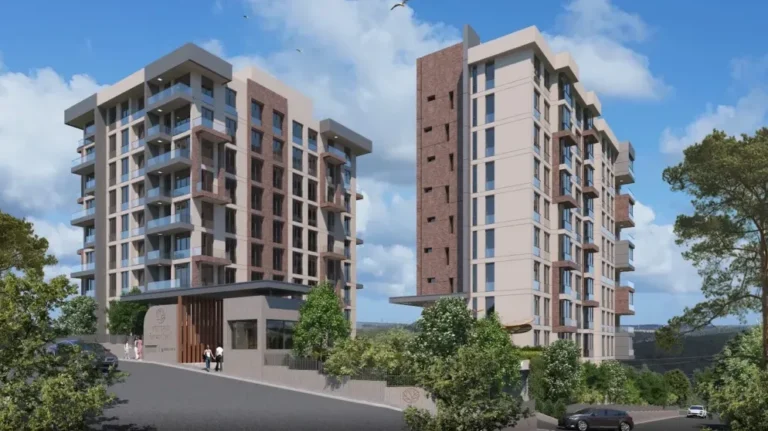
If building safety in Istanbul is your top priority, a recent project built to the current code may give you more peace of mind. For example, Kağıthane Woodland-View Apartments and Ataşehir Apartments near Metro are both ready to move into. Even so, ask for the permits and technical documents for any project. The Property Istanbul team can help you request them.
This article is general information, not legal, tax or financial advice.
Related reading: our guides to urban renewal in Istanbul and the occupancy permit (iskan).
Building safety in Istanbul: frequently asked questions
Is a risky-building report a reason not to buy?
Not automatically. It is a reason not to live there unrenovated, and a reason to price the flat as land share plus subsidy rather than as a home. Buyers who understand the Yarısı Bizden figures and the renewal timeline can do well; buyers who want to move in next month should look elsewhere.
For building safety, which Istanbul areas are the best to buy property in?
Districts with mostly post-2008 stock and firmer ground: Başakşehir, Beylikdüzü’s newer phases, Çekmeköy, Sancaktepe and the newer parts of Kağıthane and Ataşehir. Soft soils along the Marmara shore from Avcılar to Zeytinburnu need more care. Our district comparison lists Istanbul’s best areas to buy property with building age alongside prices.
Does building safety affect property eligible for Turkish citizenship?
Indirectly. The valuation report that fixes the USD 400,000 threshold reflects building age and condition, so a risky older flat may be valued below its asking price and fail the threshold. New-build projects rarely have this problem; see our guide to property eligible for Turkish citizenship.
Projects in Istanbul
All projects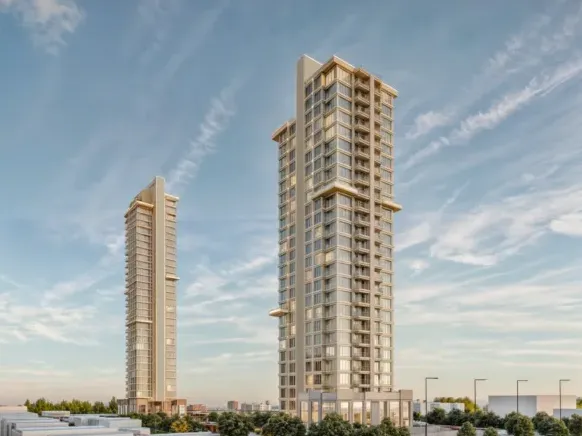 Ready to move
Ataşehir
Ataşehir Apartments near Metro
From $480,000
- 2 beds
- 2 baths
- 116 m²
 Ready to move
Kağıthane
Kağıthane Woodland-View Apartments
From $520,000
- 2 beds
- 2 baths
- 143 m²
 Ready to move
Ataşehir
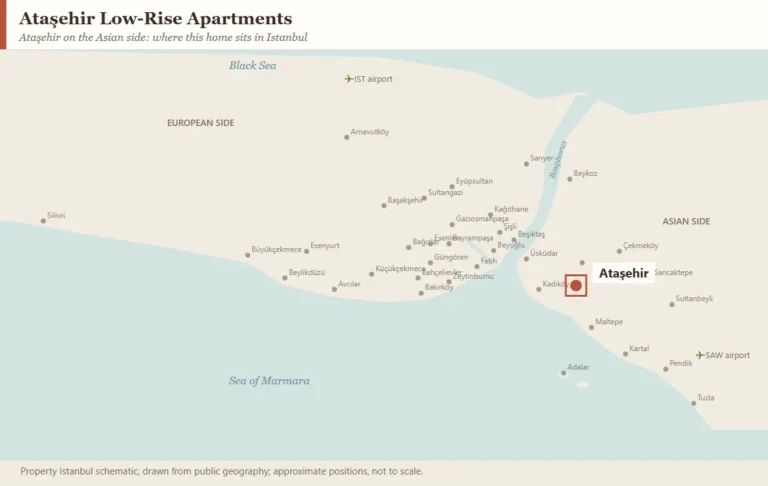
Ataşehir Low-Rise Apartments: Quiet-Street Block with Indoor Pool
From $540,000
- 1 bed
- 1 bath
- 63 m²