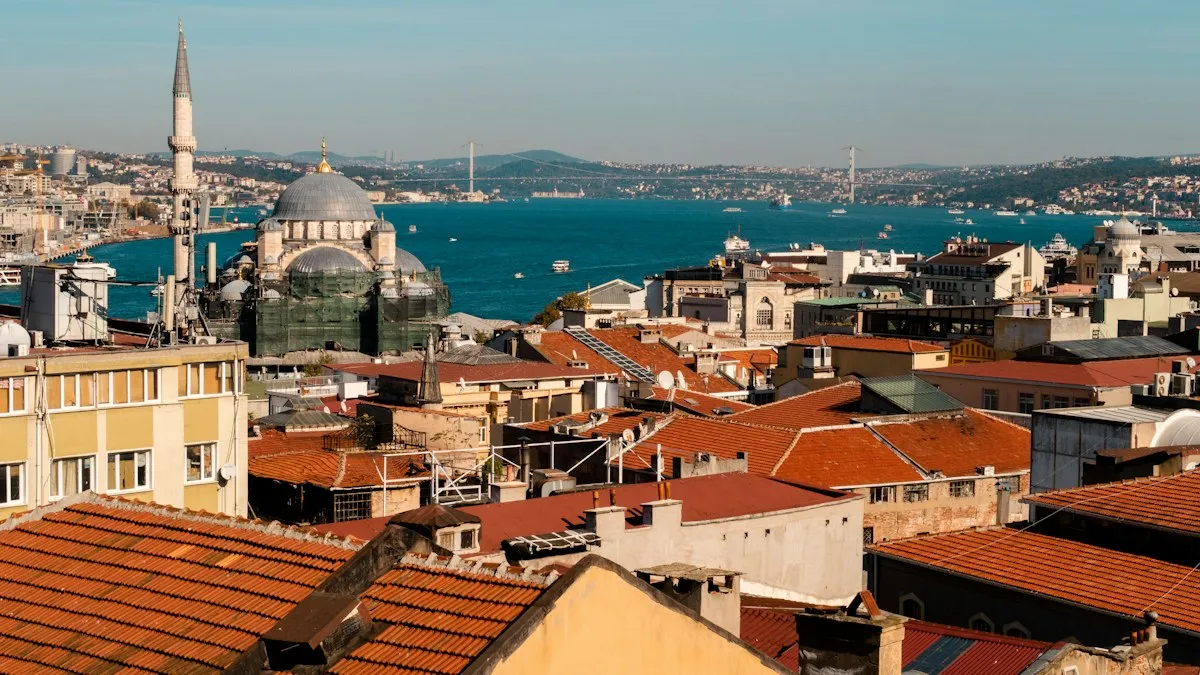
Istanbul has 39 districts, and each one feels different. Choosing the right district in Istanbul is often harder than choosing the apartment. This guide gives you a simple six-step method, so your shortlist fits your goals before you start viewing homes.
Step 1: choosing a district in Istanbul starts with your goal
Decide why you are buying. A home to live in, a rental investment and a holiday base each point to different areas. For example, rental buyers often focus on transport and jobs, while families focus on schools and parks.
Step 2: set a realistic budget
Prices vary widely by district. Central and Bosphorus areas cost the most, while outer districts offer more space. Include purchase costs too. The hidden costs of buying an apartment in Istanbul are listed in a separate guide.
Step 3: pick your side and your commute
Decide whether the European or Asian side suits you. Then map your main daily trips, so that you can rule out districts with long commutes. See our guide on choosing a neighbourhood by commute.
Step 4: check services in each district in Istanbul
Look at schools, hospitals, shops and parks, and check how easy it is to live without a car. Our guide to daily essentials includes a checklist.
Step 5: look at the building stock
Some districts have mostly older buildings, while others are full of new complexes. Decide whether you prefer new-build or resale. Our comparison of new-build vs resale property explains the trade-offs.
Step 6: research future plans carefully
New rail lines and urban renewal can change an area. However, rely on official sources, not sales promises. Then visit your top two or three districts in person.
Best areas to buy property in Istanbul: the numbers side by side
Steps 1 to 6 are qualitative. Before you shortlist, put the candidate districts next to each other with real figures. The table combines three sources: average asking prices for apartments in November 2025 (Endeksa, via Türkiye Gazetesi, 18 December 2025), Endeksa’s 2026 asking rents for 100 m² flats (via İnternet Haber) and the number of homes sold in the first quarter of 2026 (TÜİK, via Türkiye Gazetesi, 17 April 2026). Sales volume matters because a liquid district is easier to exit.
| District | Asking price, TL/m² (Nov 2025) | Rent, 100 m² (2026) | Homes sold, Q1 2026 | Typical buyer |
|---|---|---|---|---|
| Esenyurt | 26,828 | 22,800 TL | 8,422 | Budget buyers, highest turnover in the city |
| Beylikdüzü | 39,812 | 28,900 TL | 2,571 | Families wanting new, planned estates by the Marmara |
| Bahçelievler | 46,419 | 39,300 TL | 2,802 | Commuters near the airport metro and E-5 |
| Küçükçekmece | n/a | 36,700 TL | 3,024 | Lake-side new builds, metro to the centre |
| Pendik | 54,270 | 33,000 TL | 3,015 | Asian-side buyers near Sabiha Gökçen and Marmaray |
| Başakşehir | 60,662 | 35,700 TL | 2,101 | Families, hospital campus, new-build estates |
| Ümraniye | 63,188 | 37,400 TL | 2,138 | Finance-centre workers, two metro lines |
| Kartal | 66,535 | 41,300 TL | 2,324 | Sea-view towers, courthouse and Marmaray |
| Kadıköy | 144,366 | 65,100 TL | 2,645 | Lifestyle buyers, established resale market |
Two patterns stand out. First, the price gap between the cheapest and the most expensive district here is about 5.4 times, while the rent gap is only about 2.9 times; this is why outer districts show higher yields on paper and central districts rely more on capital growth. Second, Esenyurt alone accounted for 12.9% of all Istanbul sales in Q1 2026, so prices there are set by a very active market, whereas low-volume districts such as Beşiktaş (645 sales) or Sarıyer (636) can take longer to sell. For current listing prices by district see our affordable apartments in Istanbul table, and for a tenant’s view of the same areas read apartments for rent in Istanbul: prices by neighbourhood. If the home is for you to live in rather than to let, start with our shortlist of the best areas to live in Istanbul for expats weighs schools and daily life instead of yield. For a head-to-head on the west side, see Beylikdüzü vs Esenyurt.
District-by-district guides
- European side: Beşiktaş, Şişli, Bakırköy, Beylikdüzü, Başakşehir and Sarıyer.
- Asian side: Kadıköy, Üsküdar, Ataşehir and Kartal.
Frequently asked questions
How many districts should I shortlist?
Two or three is usually enough. More than that makes viewings harder to compare. Therefore, narrow your list before you travel.
Is the most expensive district the best investment?
Not necessarily. Prime areas hold value well, but high prices can limit rental yield. Well-connected outer districts can offer better returns. You can compare areas with the method in our rental yield in Istanbul guide.
Can I change district later?
Yes, but buying and selling has costs. So it pays to choose carefully the first time. Renting in your preferred district in Istanbul for a few months can help you decide before you buy property in Istanbul.
For investment in 2026, which Istanbul areas are the best to buy property in?
For rental yield, well-connected outer districts such as Başakşehir, Küçükçekmece, Ümraniye and Kartal combine moderate prices with steady tenant demand; for capital preservation, Kadıköy, Beşiktaş and Sarıyer hold value but yield less. Match the district to your goal from Step 1 rather than chasing one headline figure.
Is Esenyurt a good district to buy in?
It is the cheapest and the busiest market in Istanbul, which makes buying and selling easy, but the stock is dense and quality varies widely. Check the building’s occupancy permit and the developer’s record carefully, as described in our guide to buying property in Istanbul.
To compare how districts connect by rail, use the route maps on Metro Istanbul.
Once you have settled on a district, view our projects there and elsewhere in Istanbul or ask Property Istanbul to compare two districts for you.
For a ranked shortlist, turn to the best areas to live in Istanbul for expats, which weighs rent, transport and purchase prices.
Projects in Istanbul
All projects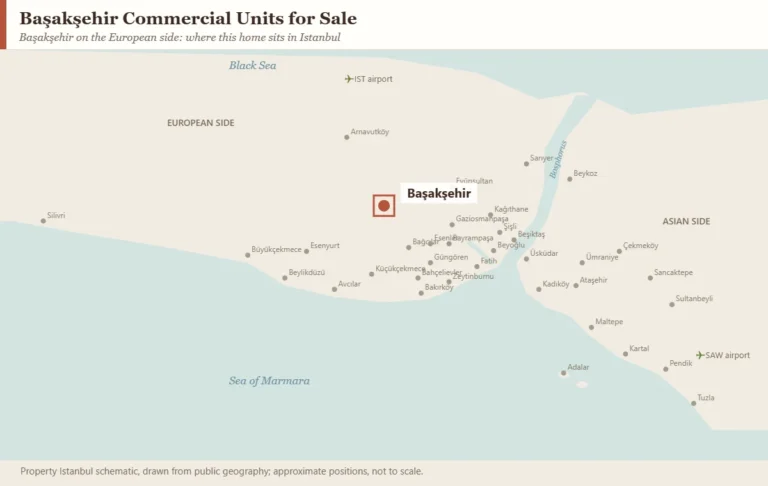 Ready to move
Başakşehir
Başakşehir Commercial Units for Sale
From $175,000
- 100 m²
 Ready to move
Kadıköy
Erenköy Apartments for Sale near Bağdat Avenue
From $300,000
- 1 bed
- 1 bath
- 52 m²
 Ready to move
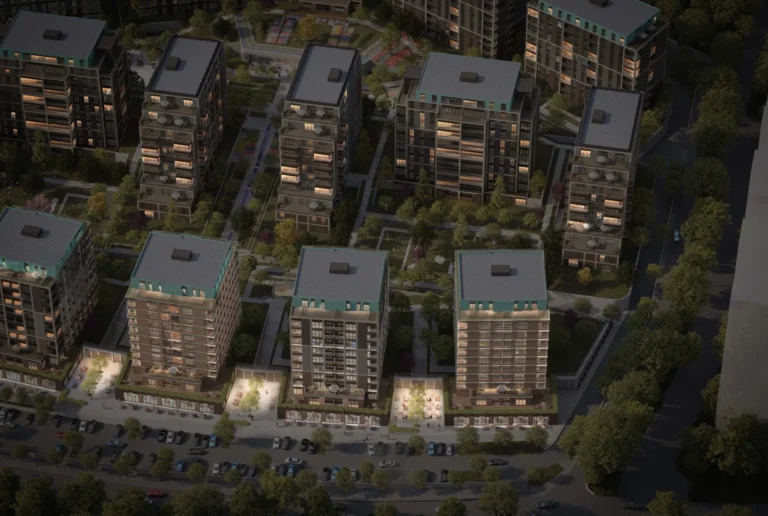
Başakşehir
Başakşehir Family Apartments: Kayaşehir Boulevard Apartments
From $280,000
- 1 bed
- 1 bath
- 75 m²