
Most foreign buyers in Istanbul pay cash, but borrowing is possible. A mortgage in Turkey for foreigners works much like a local home loan, with a few extra checks and usually a bigger deposit. This guide explains who can borrow, what banks ask for, what the loan costs and when a developer payment plan makes more sense.
Can foreigners get a mortgage in Turkey?
Yes, several Turkish banks lend to foreign buyers. However, each bank decides case by case, and some lend only to certain nationalities or to people with a residence permit. Therefore, speak to two or three banks before you commit to a home.
How much can you borrow?
Banks lend a share of the valuation, not the asking price. For foreign buyers, the loan often covers around half to two thirds of the value, so plan for a deposit of at least a third. In addition, the Banking Regulation and Supervision Agency (BDDK) sets loan limits for housing loans, and these limits change from time to time.
Currency of the loan
Most housing loans to individuals in Turkey are in Turkish lira. As a result, your monthly payment is fixed in lira, while your income may be in another currency. Think carefully about exchange rate risk before you borrow.
Documents for a mortgage in Turkey for foreigners
- Your valid passport plus a Turkish tax number.
- A Turkish bank account, usually with the lending bank.
- Evidence of income: payslips, tax returns or bank statements, for example.
- The sale agreement or reservation form for the home.
- A valuation report from a licensed valuer, often ordered by the bank.
Banks may ask for official translations of foreign documents. Our walkthrough on opening a Turkish bank account explains the first step.
What it costs
Interest rates in Turkey follow the policy rate of the Turkish central bank, and lira rates have been high in recent years. In addition to interest, expect a valuation fee, a loan arrangement fee, compulsory DASK earthquake insurance and usually life insurance. The bank also registers a mortgage on the title deed, which it removes once you repay the loan.
Which homes qualify?
For a mortgage in Turkey for foreigners, banks lend on finished homes with a full title deed and a valid occupancy permit. Many banks also look at the building’s age and earthquake safety. Our guide to building safety in Istanbul shows what to check, and our ready to move apartments page lists completed homes.
Payment plans: the common alternative
Many developers offer interest-free or low-interest instalments, especially on off-plan homes. For example, some projects take a down payment first and then collect the remainder in instalments across 12 to 36 months. Our guide to property payment plans in Istanbul compares the options, and our off-plan projects in Istanbul page shows current examples.
Bank loan or developer payment plan?
- Choose a mortgage if you want a finished home and can show steady income.
- Choose a payment plan if you prefer an off-plan home and want to avoid lira interest.
- In both cases, compare the total cost, not just the monthly figure.
Mortgage in Turkey for foreigners in 2026: rates, limits and a worked example
Borrowing in Turkey is expensive because interest rates track inflation. The figures below are the ones that set the terms a foreign buyer will actually be offered in late 2026, with their sources, so you can judge whether a loan or a developer payment plan makes more sense.
| Item | Position in late 2026 | Source |
|---|---|---|
| Central Bank policy rate | 36%, after a cut from 37% on 22 October 2026 | TCMB decision; Milli Gazete, 22 Oct 2026 |
| Housing loan rates | About 2.9% to 3.7% per month at the main banks; sector weighted average around 42% a year | TCMB weekly data; Politikam, 25 Sep 2026 |
| Loan-to-value caps (BDDK) | Up to 90% for homes valued at 5 million TL or less, falling by band to 40–50% at 10–20 million TL and 20–40% above 20 million TL | BDDK decision; CNN Türk, 31 Jan 2026 |
| What banks lend foreigners in practice | Usually 50% to 70% of the bank’s own valuation, within the BDDK cap, for finished homes with kat mülkiyeti or an approved project | Bank practice |
| Currency | Turkish lira; individuals without foreign-currency income cannot take FX or FX-indexed housing loans | Decree No. 32 on the Protection of the Value of Turkish Currency |
| Term | Typically up to 10 years | Bank practice |
| Taxes on the loan | Consumer housing loans are exempt from the banking transaction tax (BSMV) and the KKDF levy | Law 5582 on housing finance |
| Extra costs | Bank valuation fee, mortgage registration at the land registry, compulsory DASK and usually life insurance | Bank fee schedules |
Worked example: $250,000 flat, 10-year loan
A $250,000 apartment is about 12.5 million TL at 50 TL to the dollar, which puts it in the 10 to 20 million TL band where the BDDK cap is 40% to 50%. Assume the bank lends 40%, or 5 million TL, at 3.0% a month over 120 months. The instalment is roughly 154,000 TL a month, about $3,100 at today’s rate, and total repayments come to around 18.5 million TL, 3.7 times the sum borrowed. For comparison, a flat of this size lets for roughly 45,000 TL a month in Istanbul in 2026 (Emlakjet, August 2026), so the mortgage payment is more than three times the rent it could earn. That gap is why most foreign buyers in Istanbul pay cash or use the interest-free instalments covered in our article on payment plans in Istanbul; the one-off purchase costs are listed in hidden costs of buying an apartment in Istanbul. The lira instalment does fall in real terms as inflation continues, but you carry the exchange-rate risk on the currency you earn in.
Frequently asked questions
Do I need a residence permit?
Not always. Some banks lend to non-residents, while others ask for a residence permit or a Turkish guarantor.
Can I use a mortgage for a citizenship purchase?
It is possible, but the rules on payments and the threshold are strict. Read our guide to citizenship and buying in Istanbul and ask a lawyer first.
Can I borrow from a bank in my home country?
Some buyers raise money at home, for example against an existing property. Then they buy in Istanbul as cash buyers.
What interest rate will a foreigner pay on a mortgage in Turkey in 2026?
Expect roughly 3% a month, or 40% to 45% a year, in lira, in line with the Central Bank’s 36% policy rate. Foreign buyers are not offered a separate rate, but banks apply stricter loan-to-value limits and ask for more documents.
Can I get a mortgage in Turkey in euros or dollars?
Not as an individual without documented foreign-currency income: Turkish law restricts FX and FX-indexed loans to private borrowers. Some buyers borrow in their home country against assets there and pay cash in Turkey, which avoids both the lira rate and the BDDK caps; our guide to buying Istanbul property shows where financing fits in the timeline.
I am not a financial adviser, so compare offers carefully and take independent advice before you borrow.
To compare cash and a loan on a real property, open our offers in Istanbul or discuss financing with Property Istanbul.
Projects in Istanbul
All projects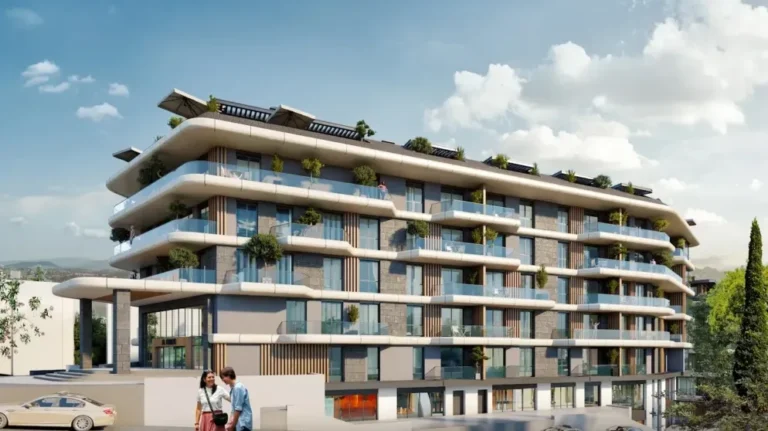 Under construction
Beşiktaş
Etiler Horizontal Garden Homes
From $900,000
- 1 bed
- 1 bath
- 70 m²
 Under construction
Gaziosmanpaşa
Gaziosmanpaşa 3+1 Family Apartments
From $470,000
- 3 beds
- 2 baths
- 145 m²
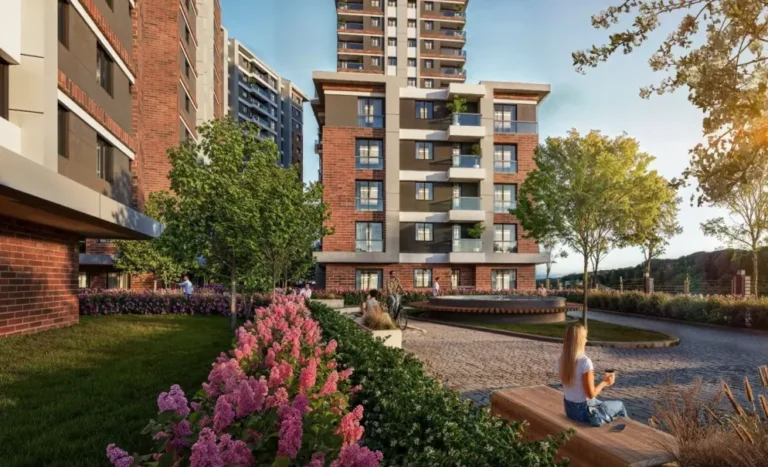 Under construction
Küçükçekmece
Lakefront Property in Istanbul: Küçükçekmece Waterside Off-Plan Apartments
From $200,000
- 1 bed
- 1 bath
- 75 m²