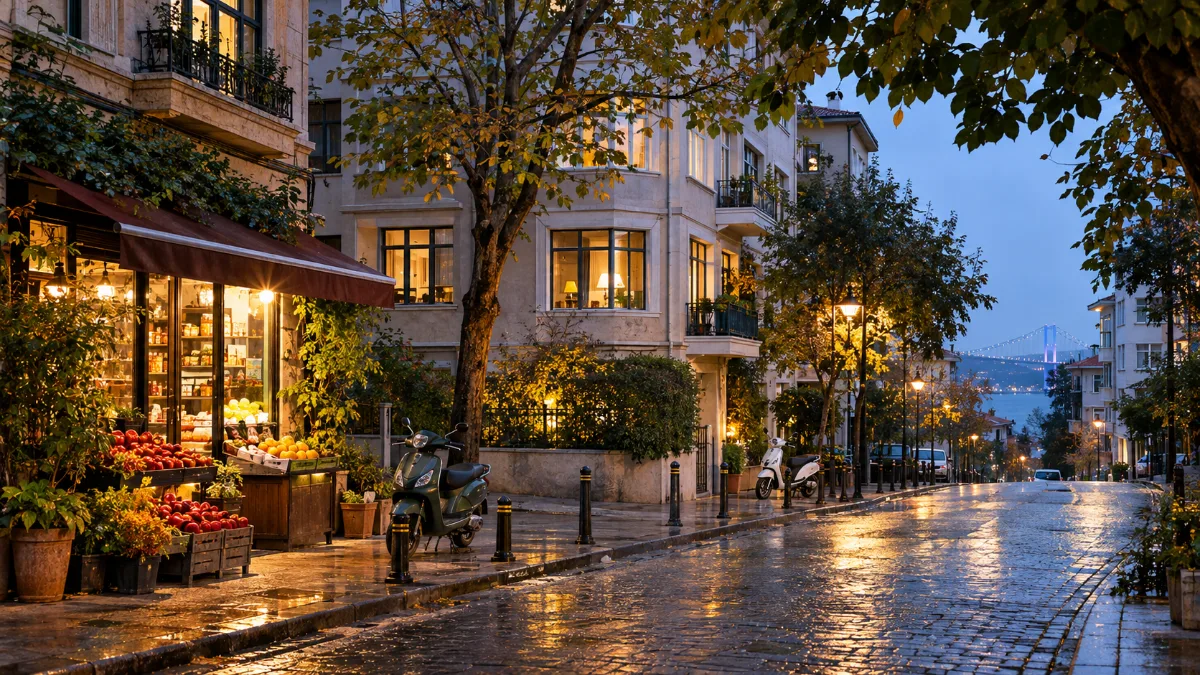
Ask people who have lived in Istanbul for years whether the city is safe and most will say yes, then add two caveats: the traffic and the earthquake. That is a fair summary. Day-to-day street crime is a smaller concern than in many large European cities, but the seismic risk is real, well documented and directly linked to where and in what building you choose to live. This guide asks is Istanbul safe to live in from a resident’s angle rather than a tourist’s.
In short
- Most residents experience Istanbul as safe for daily life; pickpocketing and scams concentrate in crowded tourist areas.
- Road traffic is a larger everyday risk than crime, for pedestrians as well as drivers.
- The earthquake risk is the serious issue: an İBB scenario for a magnitude 7.5 event estimates about 91,000 heavily damaged buildings.
- Building age, ground conditions and paperwork matter more than the district name.
Everyday safety in residential neighbourhoods
Residential Istanbul is busy late into the evening. Shops, bakeries and tea gardens stay open, streets are lit and neighbours know the doorman and the grocer. That informal attention is one reason many foreigners, including women living alone, describe their neighbourhood as comfortable at night. Problems that do occur are mostly opportunistic: phone snatching on crowded streets, card skimming, inflated taxi fares and rental scams aimed at newcomers who pay deposits before seeing a flat.
- Keep phones and wallets out of reach on ferries, the metro and in Taksim, Sultanahmet or Kadıköy crowds.
- Use licensed taxis with the meter running, or app-based taxis that show the fare.
- Never transfer a rent deposit before a viewing; check the landlord’s title deed details.
- Save 112, Turkey’s single emergency number, and your consulate’s number in your phone.
Traffic and getting around
For pedestrians the main hazard is vehicles. Drivers do not always give way at crossings and scooters use pavements in some areas. Living close to a metro, Marmaray or ferry stop reduces both risk and stress; the guide to living near the metro explains the trade-offs and understanding Istanbul’s traffic shows how congestion should shape your choice of district.
Is Istanbul safe to live in during an earthquake?
Istanbul lies close to the North Anatolian Fault beneath the Sea of Marmara. The 1999 İzmit earthquake, magnitude 7.4, struck about 100 km east of the city, and seismologists expect a large event on the Marmara segment in the coming decades. Nobody can predict the date, but the likely damage can be estimated. In an updated scenario for a magnitude 7.5 earthquake, Istanbul Metropolitan Municipality (İBB) estimated about 91,081 buildings with heavy or very heavy damage and 167,116 with moderate damage (reported in March 2022).
| What to check | Why it matters | Where to look |
|---|---|---|
| Construction year | Seismic codes tightened in 2000, 2007 and 2018; post-2019 buildings follow the 2018 code | Building permit and occupancy permit (iskan) |
| Ground conditions | Soft or filled ground amplifies shaking | AFAD earthquake hazard map and municipal soil maps |
| Risk assessment | Buildings declared risky enter urban renewal | Municipality or Ministry of Environment records |
| Compulsory insurance (DASK) | Pays for structural damage up to the policy limit | DASK policy query |
| Alterations | Removed columns or walls weaken a building | Ask the building manager and look at ground-floor shops |
Tenants can ask the landlord for the building’s construction year and iskan, and for the DASK policy number, which is compulsory for most homes and can be verified online. Buyers should go further, as explained in the building safety guide: for an older building, an engineer’s report is a small expense next to the purchase price. The Ministry of Environment estimated in 2024 that about 1.5 million homes in Istanbul were at risk, which is why urban renewal has become a daily topic in residents’ meetings.
Worked example: choosing between two flats
A family compares two similar rentals in Kadıköy at the same price. One is in a 1992 building with no risk assessment and shops on the ground floor that have removed internal walls; the other is in a 2021 building with an occupancy permit issued under the 2018 code and a DASK policy the landlord shares on request. The second flat may have a smaller balcony, but most residents would take it without hesitation.
Protests, politics and official advice
Demonstrations happen occasionally in central squares and are usually announced in advance. Residents tend to avoid those areas on the day. Governments publish travel advice for Turkey, and it is sensible to read your own government’s current guidance and register with your consulate if that service exists.
Habits that make daily life safer
- Prepare a small emergency bag and agree a meeting point with your household.
- Learn the nearest assembly area (toplanma alanı) through e-Devlet or the AFAD app.
- Fix heavy furniture to walls and keep shoes and a torch by the bed.
- Keep copies of passports, residence cards and the lease in cloud storage.
Safety is one part of the bigger picture painted in living in Istanbul as a foreigner. Those planning a longer stay can also read about retiring in Istanbul and compare districts in the best areas to live in Istanbul.
Is Istanbul safe to live in: FAQ
Is Istanbul safe to live in for foreigners?
Most foreign residents find daily life safe, with petty theft and scams the main crime concerns. The larger risks are traffic and earthquakes, which depend heavily on the building and neighbourhood you choose.
Is Istanbul safe for women living alone?
Many women live alone in Istanbul without problems, especially in busy residential districts with late-opening shops. Usual big-city precautions apply, and choosing a well-lit street near transport helps.
Which areas of Istanbul are safest in an earthquake?
Risk depends more on the individual building and the ground beneath it than on the district name. Newer buildings on firm ground generally perform better; check AFAD’s hazard map and the building’s construction year.
How likely is a big earthquake in Istanbul?
Seismologists consider a major earthquake on the Marmara segment likely in the coming decades, but its timing cannot be predicted. Planning focuses on building quality and preparedness.
Is DASK insurance compulsory for tenants?
DASK is the owner’s obligation for most residential buildings. Tenants can ask for the policy number and check it online; contents insurance is a separate, optional policy.
What number do I call in an emergency?
112 is the single emergency number for ambulance, fire and police throughout Turkey.
In this guide series: Living in Istanbul
Projects in Istanbul
All projects Ready to move
Kadıköy
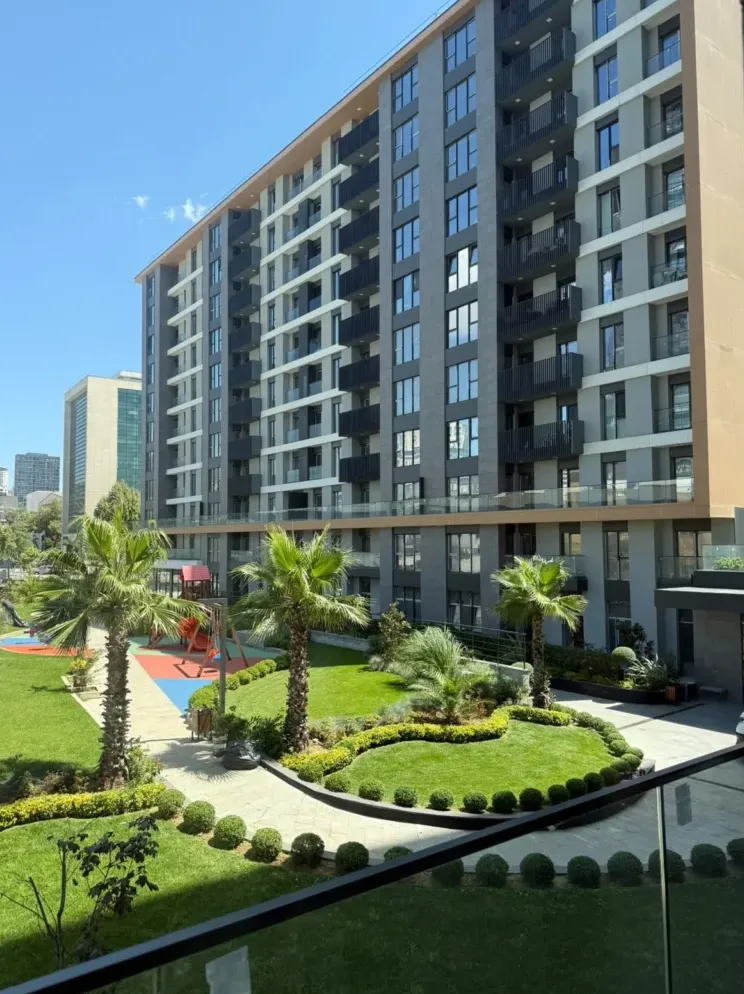
Erenköy Apartments for Sale near Bağdat Avenue
From $300,000
- 1 bed
- 1 bath
- 52 m²
 Ready to move
Bağcılar
Güneşli Twin-Block Homes by Mimar Sinan Metro
From $245,000
- 1 bed
- 1 bath
- 65 m²
 Under construction
Küçükçekmece
Lakefront Property in Istanbul: Küçükçekmece Waterside Off-Plan Apartments
From $200,000
- 1 bed
- 1 bath
- 75 m²