
Living in Istanbul as a foreigner can be wonderful and exhausting in the same week. The city gives you two continents, a ferry commute with a view and food on every corner, but it also asks you to cope with traffic, fast-changing prices and paperwork in Turkish. This guide sets out the honest pros and cons, what a month actually costs and what to sort out before you sign a lease or buy a home.
Istanbul in numbers for newcomers
A few official figures help put daily life in context. They come from TÜİK, the Turkish Statistical Institute, unless stated otherwise.
| Indicator | Figure | Source and date |
|---|---|---|
| Istanbul population | about 15.7 million | TÜİK, end of 2025 |
| Share of Turkey’s population | 18.3% | TÜİK, end of 2025 |
| Foreign residents in Turkey | about 1.5 million | TÜİK, end of 2025 |
| Annual consumer price inflation | 29.77% | TÜİK, October 2026 |
| Homes bought by foreigners in Istanbul | 817 in one month | TÜİK, September 2026 |
The inflation figure matters most for a newcomer. Rents, restaurant prices and service charges are reset often, so any budget you make today needs reviewing every few months.
The pros of living in Istanbul
A district for every way of life
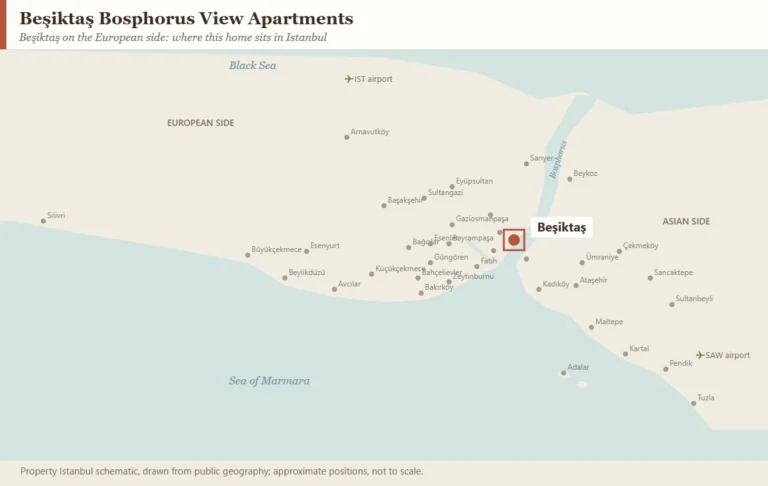
Few cities offer so much choice within one metropolitan area. You can live in a lively, walkable neighbourhood such as Kadıköy or Beşiktaş, in a planned suburb with parks and international schools such as Başakşehir, or by the sea in Maltepe or Pendik. Our guide to the European and Asian sides explains how different the two halves feel.
Rail and water instead of the car
Metro lines, the Marmaray rail tunnel under the Bosphorus and frequent ferries mean many residents never need a car. Living within walking distance of a station is the single best way to make the city feel smaller. See our overview of Istanbul public transport.
Food, markets and street life
Weekly neighbourhood markets, family-run bakeries and inexpensive local restaurants are part of everyday life, and they help keep a household budget under control even when prices rise.
Flights and private healthcare
Istanbul Airport and Sabiha Gökçen Airport connect the city directly with much of Europe, the Gulf, Central Asia and Africa. The city also has a dense network of private hospitals used to treating international patients; our guide to healthcare in Istanbul for foreigners covers insurance and how appointments work.
The cons you should plan for
Traffic and long journeys
Road traffic is heavy at peak times, and a journey that looks short on the map can take an hour. Choose where to live around your daily trips, not around a famous name; our guide on Istanbul traffic and where to live shows how.
Prices that keep moving
With annual inflation near 30%, landlords often ask for large increases at renewal, and many quote rents in lira for a fixed term. Read the contract carefully and keep a buffer in your budget.
Earthquake risk and older buildings
Istanbul lies near an active fault line. Building age, construction quality and ground conditions matter far more than the view. Before renting or buying, check when the building was approved and whether it meets current rules; our guide to building safety in Istanbul has a full list of questions.
Paperwork and residence rules
Most foreigners need a residence permit to stay beyond their visa or visa-free period, and applications are made online and then in person. Some neighbourhoods are closed to new residence registrations once foreign residents make up more than the ceiling set by the Presidency of Migration Management, so check the address before you sign a lease.
What it costs to live in Istanbul
Housing is the line that decides your budget. The table shows typical monthly rents for a 100 m² apartment in selected districts, based on Endeksa data reported in 2026. Smaller and older homes cost less; new complexes with pools and security cost more.
| District | Typical monthly rent, 100 m² |
|---|---|
| Kadıköy | 65,100 TL |
| Beşiktaş | 59,200 TL |
| Beyoğlu | 49,200 TL |
| Ataşehir | 46,000 TL |
| Şişli | 45,200 TL |
| Üsküdar | 42,500 TL |
| Fatih | 33,000 TL |
| Bağcılar | 29,700 TL |
Besides the rent, expect a monthly maintenance fee (aidat) in most buildings, and you will pay electricity, gas, water and internet separately. Our detailed breakdown of the cost of living in Istanbul covers each line, and the guide to setting up utilities explains the contracts.
Paperwork to sort out early
- A Turkish tax number, which you need for a bank account, a lease and utility contracts.
- A Turkish bank account for paying rent and bills.
- Health insurance that meets residence permit rules.
- A residence permit. If you buy a home, a property-based permit is possible; in Istanbul the home must be valued at USD 200,000 or more. You will find the process in our property-based residence permit guide.
Rent first or buy?
Many newcomers rent for six to twelve months before buying. Living in a district through a winter shows you the commute, the heating bills and the noise in a way no viewing can. If you already know the city well, buying can protect you from rent increases. Our comparison of renting vs buying in Istanbul works through both options, and the moving to Istanbul hub gathers the practical guides for your first months.
Living in Istanbul as a foreigner: FAQ
Is Istanbul a good place to live for foreigners?
For many people, yes: it offers a large choice of neighbourhoods, good private healthcare and easy flights. The main drawbacks are traffic, frequent price rises and earthquake risk, so choose your district and building carefully.
Which areas of Istanbul are popular with foreigners?
Kadıköy, Beşiktaş, Şişli and Sarıyer suit people who want a central, walkable life, while Başakşehir, Beylikdüzü and Ataşehir suit families who want newer complexes. Our neighbourhood guides compare each one.
Can I get residency by buying property in Istanbul?
Yes. If you own a home in Istanbul valued at USD 200,000 or above, it can support a short-term residence permit application. Citizenship by investment is a separate route that requires at least USD 400,000.
How long can I stay in Istanbul without a residence permit?
Only for as long as your visa or visa exemption allows, which for many nationalities is up to 90 days within any 180-day period. To stay longer you apply for a residence permit online through e-ikamet before that period runs out, then attend an appointment at the migration office with your documents.
Do I need to speak Turkish to live in Istanbul?
You can manage daily life in central districts, private hospitals and international schools with English, but government offices, utility companies and most landlords work in Turkish. Learning the basics and bringing a Turkish speaker or sworn translator to official appointments makes the first months far easier.
Is healthcare in Istanbul good for foreign residents?
Istanbul has a wide choice of private hospitals, many with international patient desks, alongside public hospitals. Most residence permit applicants under 65 must show valid health insurance, and foreigners who have held a residence permit for a year can apply to join the public scheme (SGK).
Planning to buy rather than rent? The property for sale in Istanbul overview groups homes by daily routine, while our overview of new residential projects in Istanbul explains what life on a gated site involves.
If Istanbul becomes home for the long run, read how the long-term residence permit in Turkey works before you plan extended stays abroad.
In this guide series: Living in Istanbul
Projects in Istanbul
All projects Under construction
Beşiktaş
Etiler Horizontal Garden Homes
From $900,000
- 1 bed
- 1 bath
- 70 m²
 Ready to move
Beşiktaş
Fulya Apartments in Beşiktaş
From $620,000
- 1 bed
- 1 bath
- 62 m²
 Ready to move
Beşiktaş
Beşiktaş Bosphorus View Apartments
From $750,000
- 1 bath
- 73 m²