
Many homes in Istanbul are bought by two or more people, or through a company. Before you sign, decide whose name goes on the title deed and in what shares. This guide explains buying property in Istanbul as a couple, as a family or through a company, and what each choice means later.
Buying property in Istanbul as a couple
Joint ownership in shares
Couples usually register the home in both names, often half each. However, you can choose any split, for example to match what each person paid. The title deed records each share, so one owner can later sell or leave their share without the whole home changing hands.
Documents for two buyers
Each buyer needs a passport and a Turkish tax number. In addition, both must sign at the land registry, or one can sign for the other with a power of attorney.
Residence and citizenship for couples
For a residence permit, the owner and close family members can usually apply. For citizenship, the purchase can include the spouse and children under 18. Read our guides on the property-based residence permit and how citizenship relates to a purchase.
Buying with family members
Parents and adult children sometimes buy together. In that case, agree in writing who pays the fees and how you will decide on renting or selling. Otherwise, shared ownership can lead to disputes later.
Inheritance
Turkish inheritance rules apply to property in Turkey, and they can differ from the rules in your home country. Therefore, ask a lawyer whether a will or another arrangement makes sense for your family.
Buying through a company
A company founded in Turkey, including one with foreign shareholders, can buy property for its business, subject to official approval. A foreign company, however, usually cannot buy property in Turkey directly. Company purchases make most sense for offices, shops or rental portfolios. For example, see our Başakşehir Commercial Units for Sale.
Pros and cons of a company
- Pros: easier to add partners, and business expenses may be deductible.
- Cons: approval steps, accounting costs and different tax rules.
- Note: a company purchase does not usually support a personal residence permit.
Families applying for a passport should also read our guide to Turkish citizenship for family members.
Buying property in Istanbul as a couple, with family or through a company: the 2026 rules compared
Who signs the deed changes four things that money cannot fix later: citizenship eligibility, the VAT exemption, how rental income is taxed and whether a future sale is tax-free. The rules below are as they stand in November 2026. A natural person who pays at least USD 400,000 for property and keeps it three years may apply for citizenship, and that one application also covers the spouse and children under 18; the threshold is tested on the applicant’s own share, so a 50/50 purchase by spouses of a USD 480,000 flat qualifies neither of them. A Turkish company with foreign shareholders may buy property within its stated business purpose (Land Registry Law, Article 36), but citizenship is only ever granted to natural persons, so a company purchase closes that door. The VAT exemption for first-time foreign buyers paying in foreign currency and holding for one year (VAT Law, Article 13/i) is available to non-resident individuals and to foreign companies without a Turkish establishment, not to a Turkish-registered company. Rental income is taxed in brackets of 15 to 40 percent for individuals, with a 2026 exemption of TL 58,000, against a flat 25 percent corporate rate for companies, which can deduct all expenses. And the capital-gains exemption after five years of ownership (Income Tax Law, repeated Article 80) belongs to individuals only.
| Structure | Citizenship route (USD 400,000) | Residence permit (USD 200,000 in Istanbul) | VAT exemption on new build | Rental income tax | Tax-free sale after 5 years |
|---|---|---|---|---|---|
| One spouse on the deed | Yes; spouse and minor children included | Owner; family on dependent permits | Yes, if non-resident and paid in FX | 15–40%, TL 58,000 exemption | Yes |
| Spouses 50/50 | Only if each share is at least USD 400,000 | Both owners qualify on a USD 200,000 share each | Yes, each on their share | Each taxed on half; two exemptions | Yes |
| Parent 80% / adult child 20% | Parent qualifies if the 80% share is at least USD 400,000; adult child is not a dependent | Each on their share value | Yes, each | Split by share | Yes |
| Turkish company with foreign shareholders | No | No (shareholders need work or investor permits) | No; VAT paid but recoverable against company output VAT | 25% corporate tax, full expense deduction | No; gains taxed, with inflation adjustment |
The shares row is the one that catches couples. Registering the home 50/50 feels fair and can be the right choice for a USD 300,000 flat bought for use, but it quietly disqualifies a USD 480,000 purchase from citizenship and halves each owner’s residence-permit value. The fix is simple at the deed and expensive afterwards: later transfers between spouses attract the 4 percent title-deed tax again. Our guide to property eligible for Turkish citizenship covers the share and valuation rules, and the family members guide explains who rides on one application.
Worked example. A couple buying a three-bedroom flat in Ataşehir listed on this site at USD 480,000. Option A: the deed in one name, the other spouse named in the citizenship file; the family of four gets citizenship on one application, the non-resident buyer takes the VAT exemption, and after five years the flat can be sold tax-free. Option B: 50/50 shares; no citizenship, two residence permits, two rental exemptions worth TL 116,000 a year combined, and the same tax-free sale. Option C: the couple’s Turkish trading company buys it as an office-home; no citizenship, no VAT exemption, 25 percent tax on rent after expenses and tax on any gain for ever, but the flat sits outside the personal estate and can be transferred by selling shares. For a family whose goal is the passport, A wins; for a family that already has residency and wants income, B is competitive; C only makes sense when the company genuinely uses the property. Documents for two or more buyers are listed in our documents guide, and the whole sequence is in the guide to buying property in Istanbul.
Frequently asked questions
Can we change the shares later?
Yes, but a transfer between owners is treated like a sale, with fees and possibly tax.
Do both owners pay the annual property tax?
Each owner pays the share that matches their part of the title. The details are in property taxes in Turkey.
Can one of us be a Turkish citizen?
Yes. Mixed couples often buy together, and the same land registry process applies.
Can foreigners buy property in Turkey jointly with a Turkish citizen spouse?
Yes, and it is common. Foreigners can buy property in Turkey in shares with a Turkish spouse without any nationality restriction on the Turkish share; the foreign spouse’s share is subject to the usual Article 35 limits and needs the valuation report. For citizenship purposes only the foreign spouse’s share counts towards the USD 400,000.
Does the cost of buying property in Turkey differ for a company?
At the deed, no: the 4 percent title-deed tax, valuation report and revolving-fund fee are the same. The cost of buying property in Turkey through a company rises afterwards, with accountant’s fees, corporate tax returns and VAT that cannot be exempted; see the hidden costs guide for the individual’s figures.
I am not a lawyer, so for shares, inheritance or company purchases take advice from a licensed Turkish lawyer.
For official information on joint ownership and title deeds, consult the Land Registry and Cadastre authority (TKGM).
Whatever ownership structure you choose, look at our projects in Istanbul or get Property Istanbul’s view on registering the title.
Projects in Istanbul
All projects Ready to move
Ataşehir
Ataşehir Apartments near Metro
From $480,000
- 2 beds
- 2 baths
- 116 m²
 Ready to move
Başakşehir
Bahçeşehir Garden Residences: Fountain Court Residences
From $430,000
- 2 beds
- 1 bath
- 130 m²
 Ready to move
Ataşehir
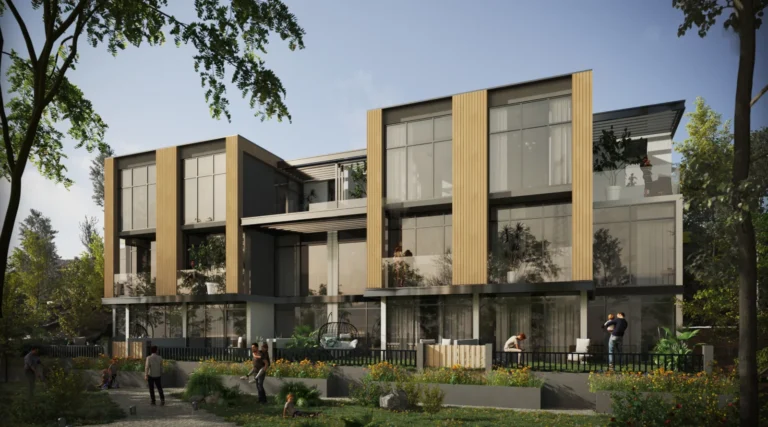
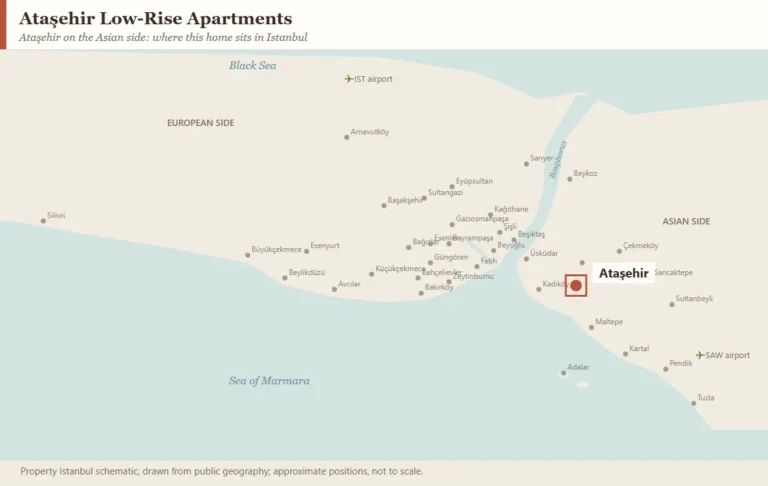
Ataşehir Low-Rise Apartments: Quiet-Street Block with Indoor Pool
From $540,000
- 1 bed
- 1 bath
- 63 m²