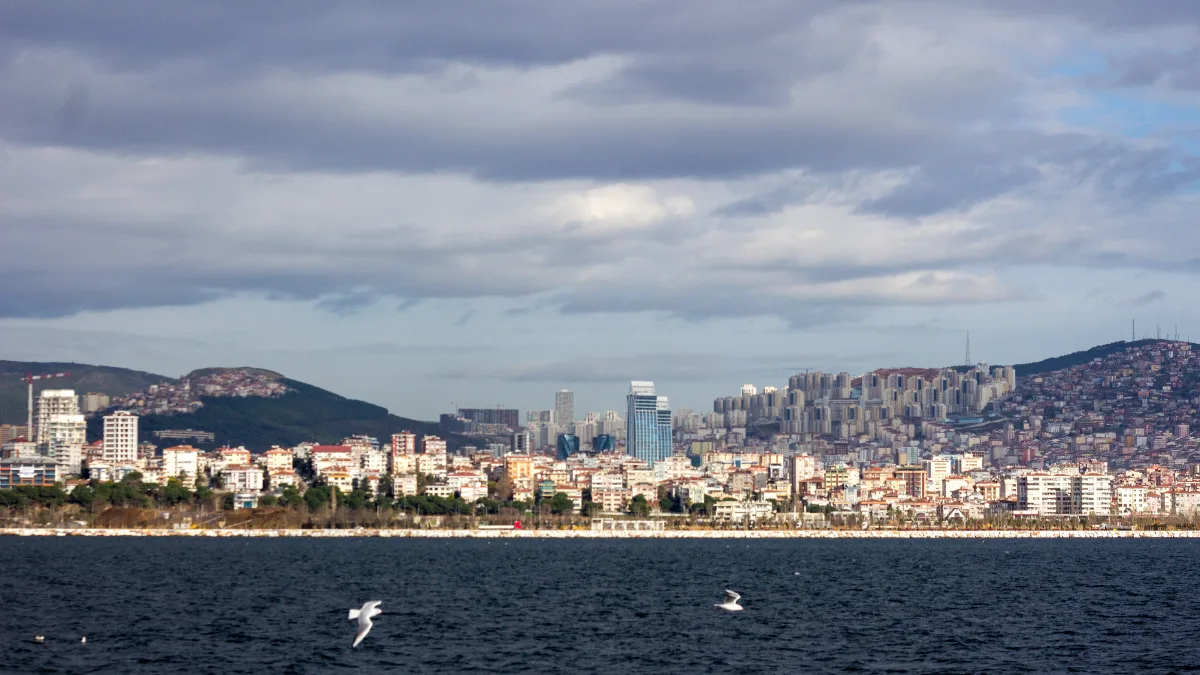
Maltepe sits on the Asian shore of the Sea of Marmara between Kadıköy and Kartal, and it has quietly turned into one of that side’s most practical places to live. It offers a long seafront, metro and Marmaray stations within reach of most neighbourhoods, and prices well below Kadıköy’s. This Maltepe neighbourhood guide covers how the district is laid out, how residents commute and what kind of homes you can expect.
Life in Maltepe at a glance
Until the 1970s Maltepe was a seaside retreat of summer houses. The opening of the first Bosphorus Bridge turned it into a commuter district, and today it is a large residential area of about 528,000 people (2022) spread over roughly 53 km². The busy streets around Maltepe Square and Bağdat Avenue, which ends in Cevizli, give it a lively centre, while the reclaimed coastal park offers one of the longest stretches of open seafront in Istanbul.
Two halves divided by the D-100
The D-100 highway splits Maltepe in two. South of it, towards the sea, neighbourhoods such as Altayçeşme, Feyzullah, Bağlarbaşı, İdealtepe and Küçükyalı are older, flatter and closer to Marmaray and the shore. North of it, areas such as Başıbüyük, Gülsuyu and Esenkent climb into the hills, with more recent towers and gated complexes, many built through urban renewal.
Maltepe neighbourhood guide: getting around
Metro and Marmaray
The M4 metro runs along the D-100 corridor from Kadıköy through Maltepe to Kartal, Pendik and Sabiha Gökçen Airport, so the airport is a direct ride for residents near the line. Marmaray runs closer to the coast, with stations in Maltepe, Cevizli, İdealtepe, Küçükyalı and Süreyya Plajı, and continues under the Bosphorus to the European side. Check Metro Istanbul for current lines and journey times.
Roads and ferries
The D-100 and the TEM motorway connect Maltepe with the bridges and with Ataşehir’s business district, though rush-hour traffic is heavy. A seasonal ferry runs from the Maltepe shore to the Princes’ Islands, and the main Kadıköy piers are a short metro ride away. Our guide to using the metro, Marmaray and ferries explains how the systems connect.
Housing in Maltepe
Maltepe’s housing has changed rapidly since the early 2010s. Many older low-rise blocks near the coast have been replaced through urban renewal with new mid-rise buildings, while larger sites further north host towers with pools, gyms and security. You will therefore find three broad options: renewed apartments in established streets near the sea, older blocks still awaiting renewal, and newer complexes in the hills with facilities but longer walks to rail stations.
A 100 m² home in Maltepe typically rents for about 44,000 TL a month on Endeksa’s 2026 figures, roughly a third less than in neighbouring Kadıköy. February 2026 market data placed average sale prices near 82,000 TL per m², against more than 150,000 TL per m² in Kadıköy. That gap explains why many families and young professionals move a few stops east.
The 1999 earthquake damaged parts of the district, so ask about construction dates and renewal status. The checks to make are listed in building safety in Istanbul.
Shops, schools and daily needs in Maltepe
- Seafront: the coastal park has walking and cycling paths, sports fields and picnic areas, and hosts large events.
- Shopping: Bağdat Avenue’s eastern end, the streets around Maltepe Square and several shopping centres along the D-100.
- Education: Maltepe University and several private and state schools.
- Healthcare: public hospitals including Süreyyapaşa in Başıbüyük, plus private hospitals in Maltepe and nearby Kozyatağı and Kartal.
Practical tips for buyers and renters in Maltepe
- Decide early whether you want to be near the sea and Marmaray or near the M4 and the D-100, as this shapes your daily commute.
- Ask whether an older building is scheduled for renewal; it can mean a long move-out period.
- Check slopes on foot in the northern neighbourhoods before you commit.
- Compare aidat fees between older blocks and new complexes, as they differ widely.
For nearby alternatives, read our Kadıköy neighbourhood guide, Kartal neighbourhood guide and Ataşehir neighbourhood guide. If sea air matters to you, our piece on coastal living in Istanbul compares other shoreline districts.
For a full relocation, not only a purchase, see our guide to moving to Istanbul: it walks through residence permits, a first rental, healthcare and living costs to weigh alongside an area like Maltepe.
Maltepe suits people who want sea access, good rail links and newer buildings at a lower price than Kadıköy. On the Asian side we also list homes such as Erenköy Apartments near Bağdat Avenue and Pendik Sea View Courtyard Residences. For more options, open our full project list or describe what you need.